Highlighting My Favorite Artists: Hieronymus Bosch
Hieronymus Bosch (c. 1450-1516) was a Dutch painter from the Northern Renaissance. Known for his dreamlike, grotesque, and religious works, he conveys moral lessons and warnings about indulgence through graphic depictions of sin.
The Garden of Earthly Delights (c. 1490-1500)
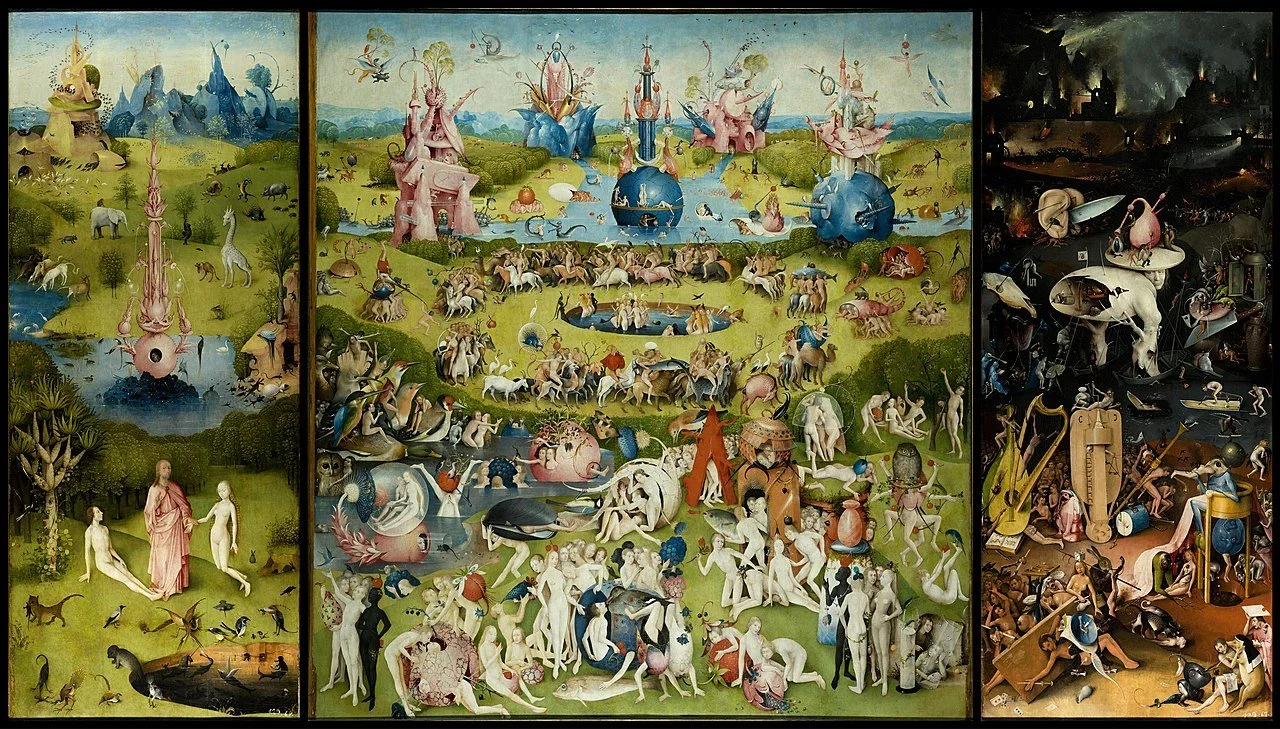
The Garden of Earthly Delights (c. 1490-1500) Inner Panels
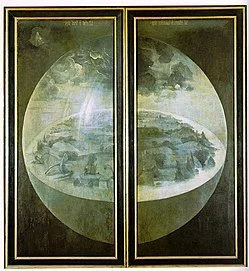
The Garden of Earthly Delights (c. 1490-1500) Outer Panels
This is a five-panel triptych consisting of three oil-painted panels when open, two oak panels when closed. Because of Bosch's religious beliefs, interpretations of the work typically assume it is a warning against the perils of temptation. The outer panels suggest the work is based on the Third Day of Creation. The intricacy of its symbolism, particularly that of the central panel, has led to a wide range of scholarly interpretations over the centuries.
Art historians are divided over whether the triptych's central panel is a moral warning or a panorama of paradise lost. The triptych can be read as a narrative from left to right, each panel contributing to the meaning of the whole work. The left and right panels can be interpreted as Eden and the Last Judgment, respectively, while the main subject was contained in the centerpiece.
His work is highly detailed and effective in its message. The right panel depicting the Last Judgment is harrowing in juxtaposition to the first two- especially in color and subject. Bosch’s use of shape language and composition creates an overall sense of harmony in the work.
The Ship of Fools (c. 1490-1500)
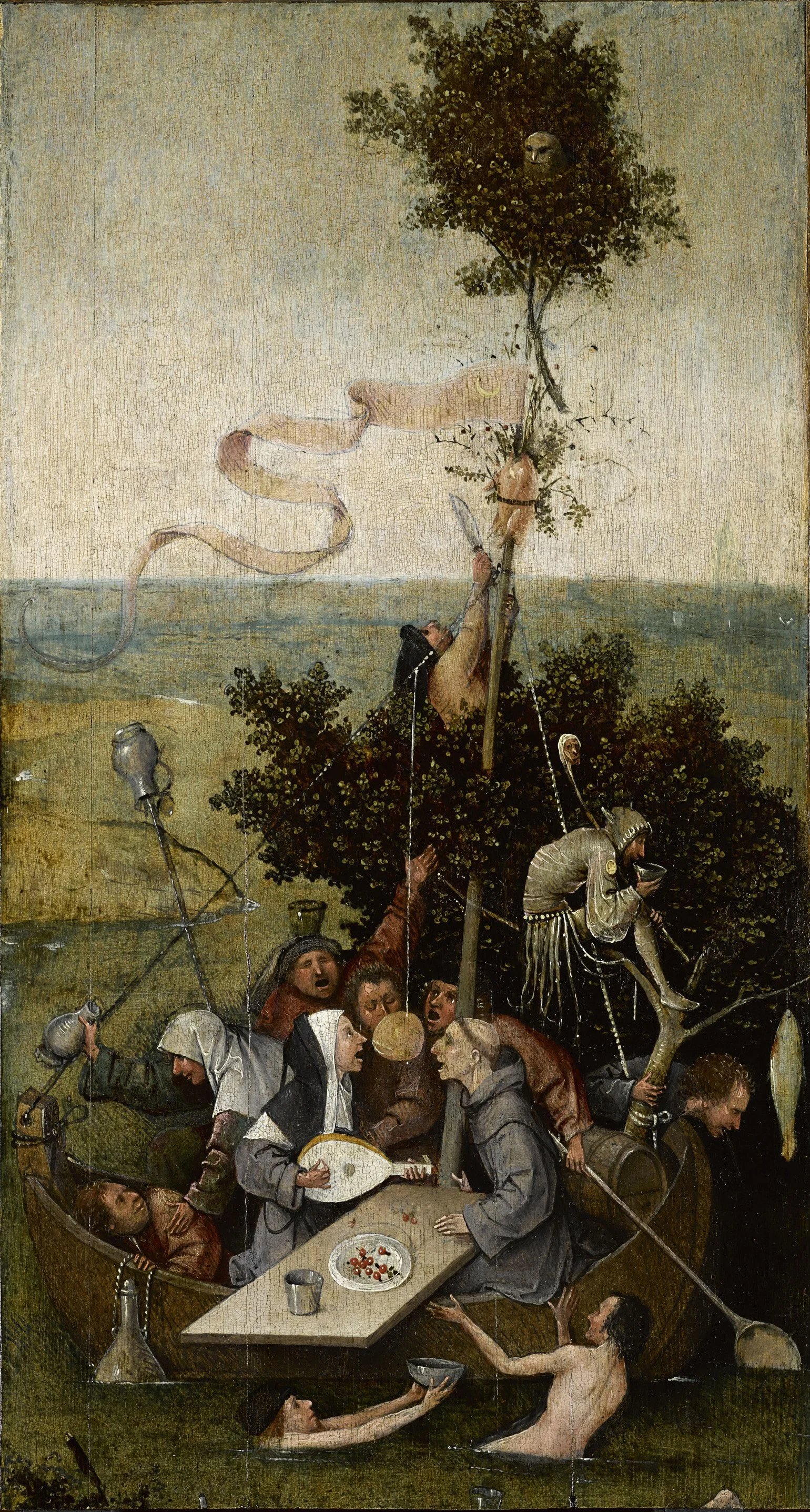
The Ship of Fools (c. 1490-1500)
This is a complex, allegorical oil-on-panel painting depicting a group of individuals aboard a small boat. Amidst various activities that suggest indulgence and moral laxity, the occupants appear oblivious to their direction or purpose. The central motif of a tree deprived of foliage save for a single sphere reminiscent of an apple references the Biblical tale of Adam and Eve’s original sin, reinforcing the painting’s thematic foundations of folly and human fallibility. A figure in the foreground is visible raising a branch, perhaps in an ill-fated attempt at navigation. Birds perch and fly around, adding to the chaotic atmosphere.
At the bottom half of the scene, the group feasts and celebrates at the boat’s center. The food strewn haphazardly across a table symbolizes the sin of gluttony. Notably, one person extends their arm out into the water, interacting with a book, symbolizing the negligence of wisdom and the scriptures. The stern of the boat is occupied by a character wearing a funnel hat, often associated with foolishness. Another figure regales the company with music, paying no heed to the danger that may lie ahead. The artwork's overall tenor serves as a moralistic caution against the heedless pursuit of fleeting pleasures, suggesting the consequences of such folly.
Besides the subject matter Bosch depicts, his use of a triangular composition adds to the atmosphere while creating a path for the viewer to follow. The visual weight at the bottom also creates a feeling of uneasiness.
Ascent of the Blessed (c. 1505-1515)
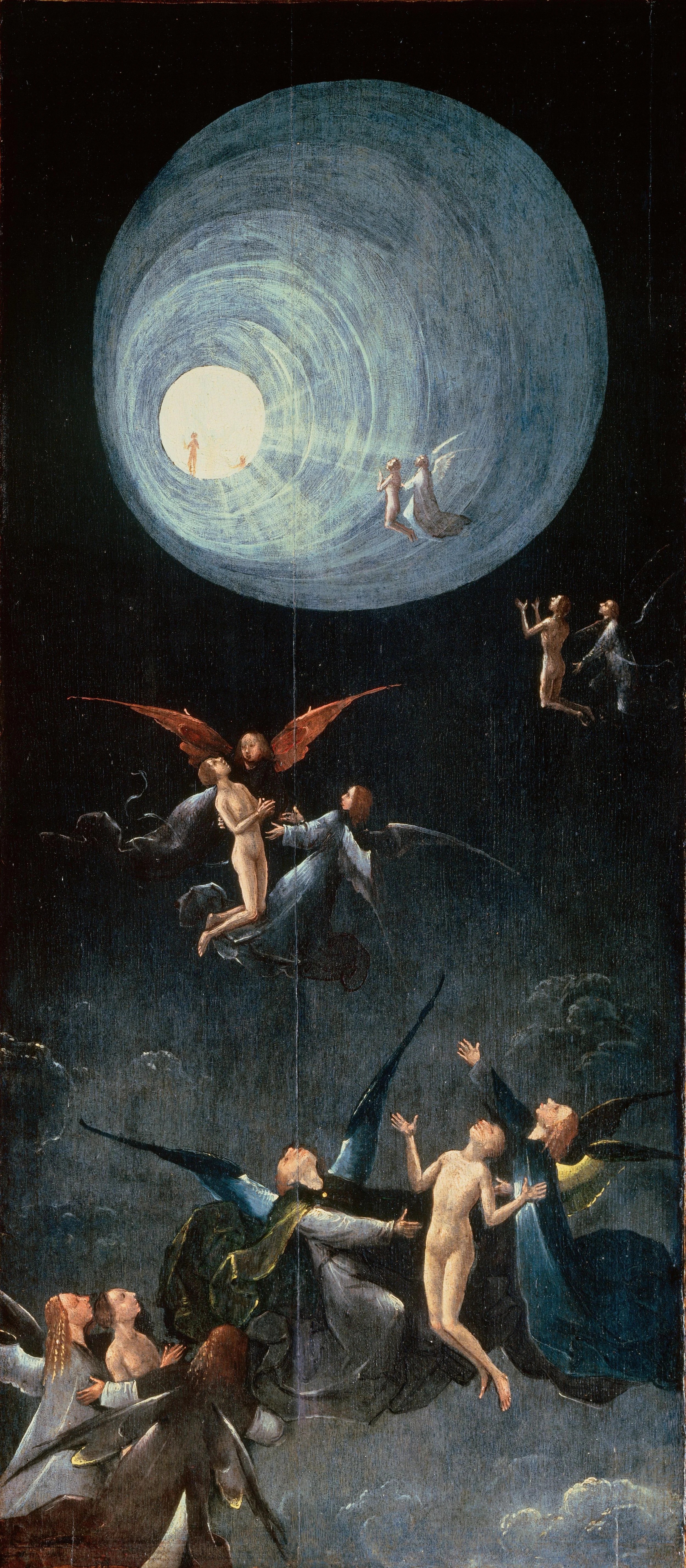
Located in the Gallerie dell'Accademia in Venice, Italy, this painting is part of a polyptych of four panels entitled “Visions of the Hereafter”. It depicts angels helping human souls towards heaven. The attribution to Bosch is not universally accepted.
The painting takes inspiration from Matthew 25: 32–3 in the Bible: 32 All the nations will be gathered before him/and he will separate the people one from another as a shepherd separates the sheep from the goats/He will put the sheep on his right and the goats on his left.
What compelled me to this painting was his emotion. The use of the light vortex on the dark background creates a sense of hope within the despair. His use of exaggerated poses for the figures at the bottom of the work heightens the emotion. The colors he utilizes create a strong sense of harmony.
